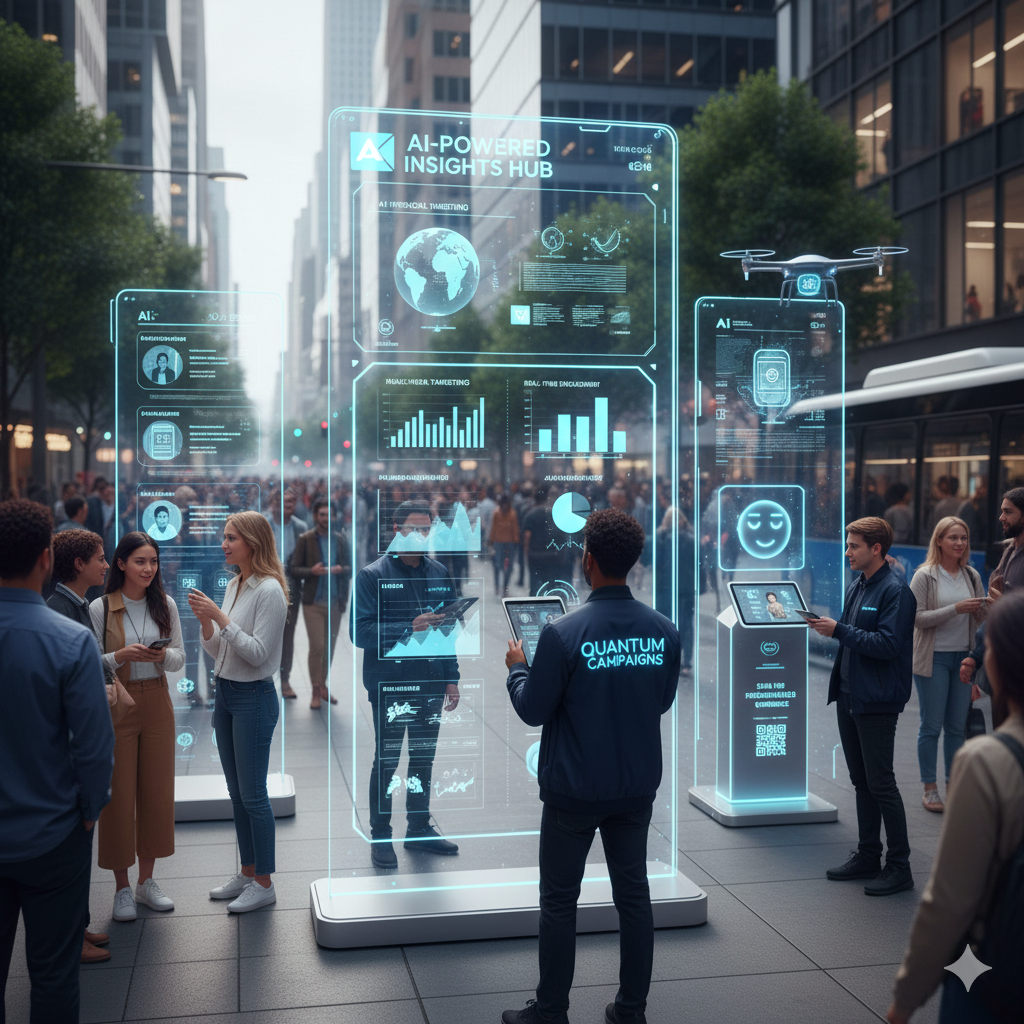
Below-the-Line (BTL) marketing has always been the backbone of direct consumer engagement. From retail activations and roadshows to corporate outreach and field promotions, BTL has traditionally focused on physical presence, manpower, and scale. Today, however, BTL is undergoing a major transformation. What was once largely execution-driven is now evolving into a data-led, insight-powered engagement model, driven by artificial intelligence.
How Today’s BTL Is Operating
Modern BTL activations are more dynamic and experience-focused than ever before. Brands are investing heavily in immersive setups, live demonstrations, on-ground sampling, and hyperlocal campaigns to cut through clutter. However, despite better creativity and execution, many BTL campaigns still face familiar challenges—limited measurability, inconsistent data capture, delayed reporting, and dependency on manual processes.
Field teams often collect leads manually, footfall is estimated rather than measured, and campaign effectiveness is reviewed only after completion. This results in lost opportunities, inefficient resource utilisation, and a gap between on-ground effort and actual business outcomes.
The Role of AI in Making BTL More Productive
AI has the potential to completely redefine how BTL campaigns are planned, executed, and evaluated. When integrated correctly, AI turns BTL into a smart, responsive, and performance-driven marketing channel.
AI-powered audience profiling enables brands to identify high-intent consumers based on location, behavior, and historical data. Geo-fencing and predictive analytics help determine where and when activations will perform best, improving footfall quality rather than just quantity.
On-ground execution becomes more intelligent through AI-enabled kiosks, QR-led engagement journeys, chatbots, and voice-based assistants that guide consumers, answer queries, and collect structured data instantly. Facial sentiment analysis and engagement tracking tools provide real-time insights into consumer reactions, helping brands fine-tune messaging on the spot.
Real-Time Monitoring and Smarter Decision-Making
One of AI’s biggest advantages in BTL is real-time performance tracking. Live dashboards allow brand managers to monitor footfall, dwell time, lead quality, and engagement levels as the campaign unfolds. This enables quick course corrections—optimizing staff deployment, messaging, or engagement formats without waiting for post-campaign reports.
AI also enhances field-force efficiency by optimizing routes, automating attendance tracking, and forecasting inventory requirements for sampling and demos. This reduces wastage, controls costs, and ensures smoother execution across multiple locations.
From Execution to Measurable Impact
The true power of AI-powered BTL lies in measurable outcomes. Automated lead scoring, CRM integration, and predictive conversion models ensure that every on-ground interaction contributes to long-term business value. Brands no longer just “activate”; they learn, adapt, and scale.
The Way Forward
The future of BTL is intelligent, integrated, and insight-driven. By embracing AI, brands can transform BTL from a cost-heavy execution tool into a high-performance engagement engine—one that delivers relevance, accountability, and measurable ROI at every touchpoint.